





DELIVERING NATURAL COOLNESS WITH zero-energy technology.
Creating a world where everyone who needs cooling has equal access.
What’s SPACECOOL?
A breakthrough radiative cooling material enabling zero-energy
cooling.
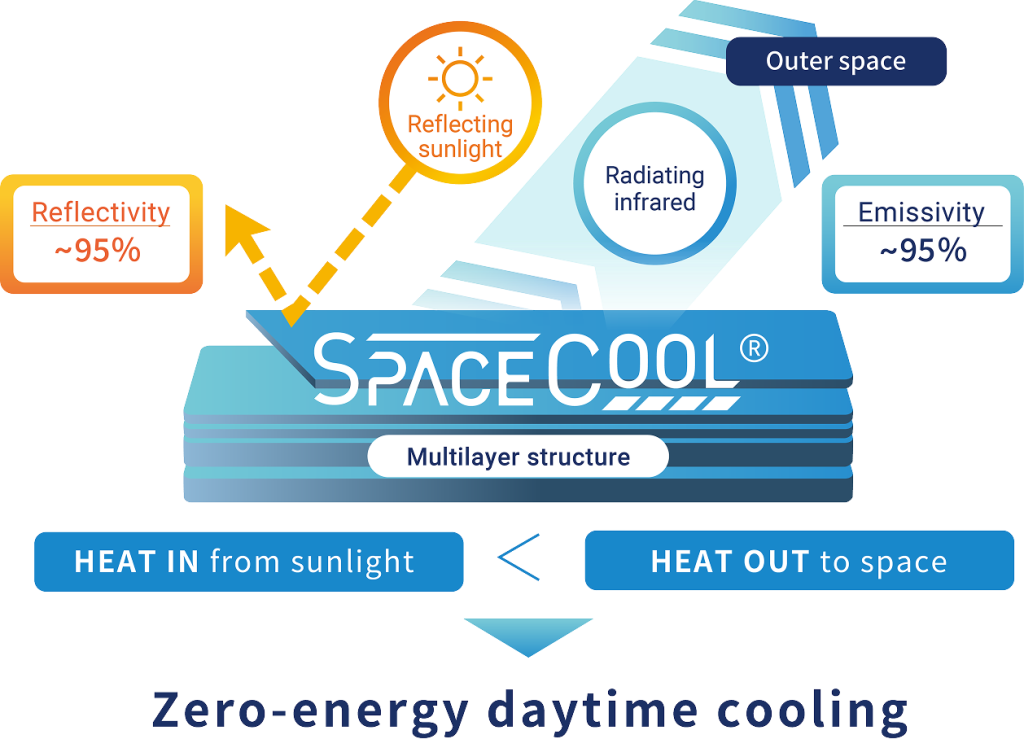
By replicating the natural radiative cooling phenomenon through proprietary optical design, the material features a unique multilayer structure that achieves both high solar reflectance and high thermal emittance—each up to 95%.
This technology contributes to both climate change mitigation and adaptation.

What Is the
Atmospheric
Window?
Light has wavelengths that vary in their ability to pass through the atmosphere—some have high transmittance, while others are easily absorbed by the atmosphere.
To transport heat into space in the form of light energy, wavelengths with high atmospheric transmittance are ideal. Among these, the 8–13μm wavelength range is particularly transmissive and is referred to as the “atmospheric window.”
Movie
SPACECOOL is a groundbreaking material that delivers world-class radiative cooling performance, lowering temperatures below the ambient air with zero energy consumption.
It contributes to climate change mitigation and adaptation, supporting the development of a sustainable society.
Comparison
Differences from
Conventional Technology
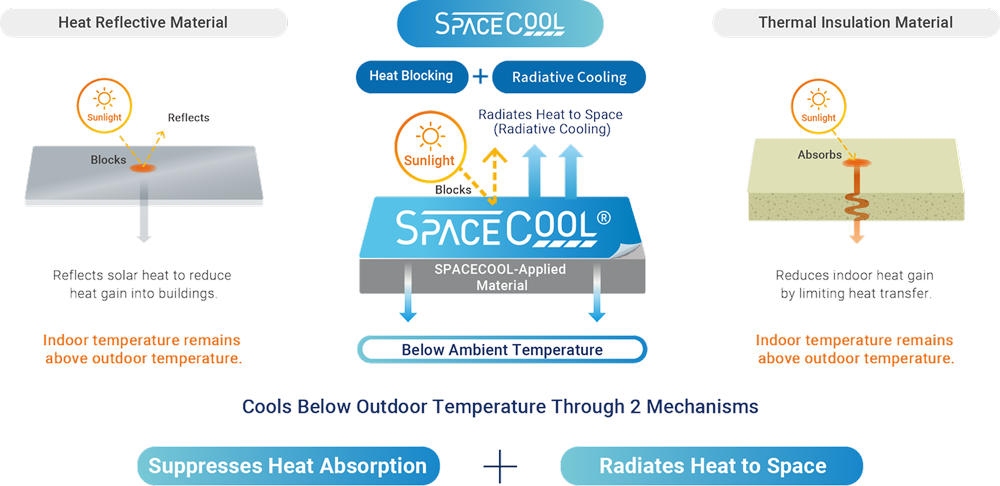
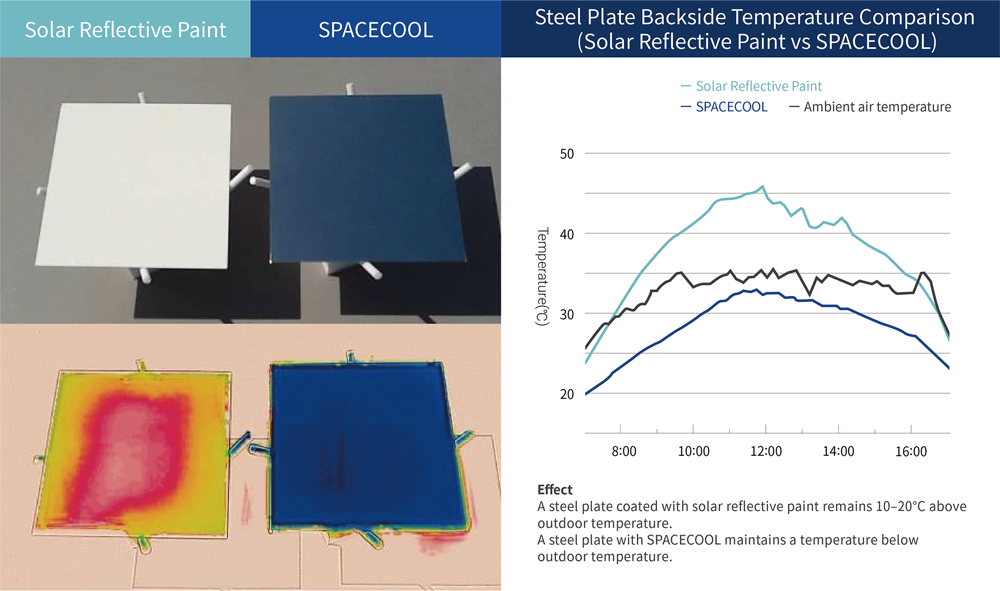
Conventional thermal insulation and heat-shielding materials only reduce the amount of solar heat entering a room; they do not provide any cooling effect. In contrast, SPACECOOL not only suppresses solar heat gain but also actively radiates indoor heat into space, enabling daytime cooling with zero energy—something impossible with traditional technologies.
Line up
A New Material
Redefining
Coolness
By replicating the natural radiative cooling phenomenon through proprietary optical design, the material features a unique multilayer structure that achieves.

High UV
Resistance
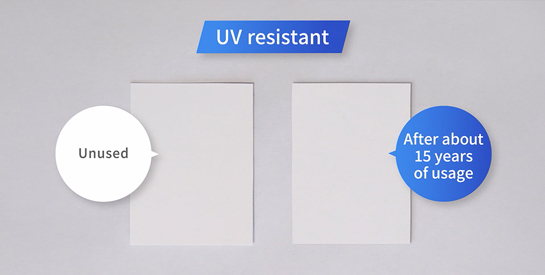
Xenon weathering tests have confirmed that the material has an estimated UV durability equivalent to approximately 15 years.
*Actual durability may vary depending on the usage environment.
*This is not a guaranteed value.
Toward Global Standardization
Establishing SPACECOOL
as an International Radiative
Cooling Standard
PaRaMetriC is a collaborative research project aimed at establishing international standards for radiative cooling materials.
Participants
9 National Metrology Institutes
2 Universities
3 National Research Organizations
2 Companies
1 Committee
Outcome
Comparative evaluation of radiative cooling materials
based on performance, durability, and scalability.
SPACECOOL was identified as the most advanced material.

Case Studies
01
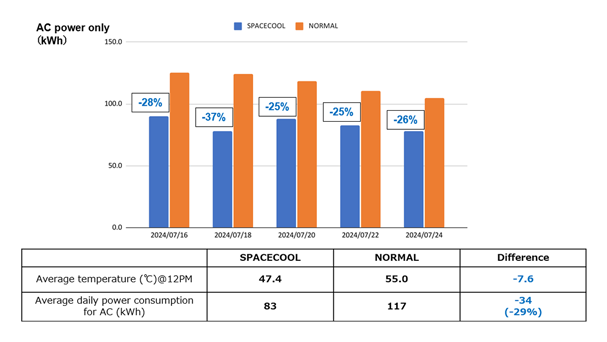
Average A/C Energy Reduction of 29% in Container Houses Estimated CO₂ Emissions Reduction of Approximately 21 Tons Over 15 Years
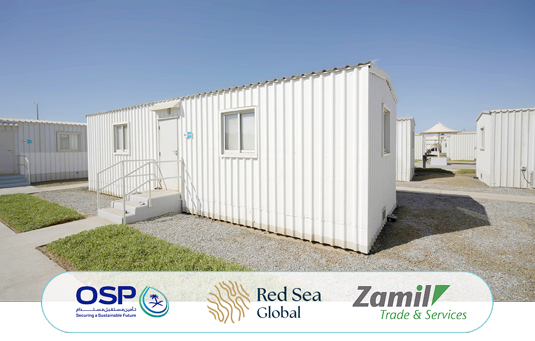
Demonstration Conditions
Demonstration Results
Occupied container house:
Average A/C energy reduction of 29%, with a maximum reduction of 37%(Measurement period: July 16–24)
Unoccupied container house:
Average A/C energy reduction of 49%, with a maximum reduction of 64%(Measurement period: August 31–September 29)Estimated
CO₂ reduction:
Estimated reduction of about 21 t per container per year (15-year basis)
Calculated independently by OSP and Red Sea Global:
• The application of SPACECOOL extended the air-conditioning system’s lifespan from five to ten years, reducing refrigerant usage by 4.35 kg (equivalent to 9 t-CO₂).
• Reduced electricity consumption for air-conditioning also decreased the required number of solar panels. The manufacturing and installation of solar panels emit 41 g of CO₂ per kWh. Over 15 years, the energy savings achieved with SPACECOOL amount to 289,080 kWh (equivalent to 12 t-CO₂).
• Total estimated reduction: 21 t-CO₂.
02
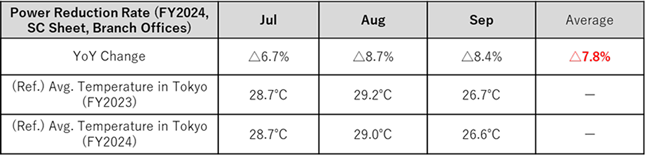
Average Electricity Reduction of 7.8% at The 600sqm Office
Demonstration Conditions
Demonstration Results
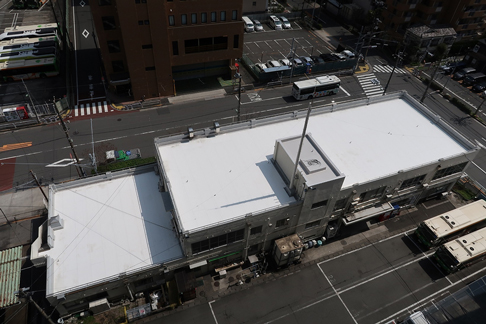
SPACECOOL-integrated waterproof sheets were installed on the concrete rooftop of a Tokyo Metropolitan Bureau of Transportation facility.
As a result, summer electricity consumption was reduced by a maximum of 8.7% and an average of 7.8%.
FAQ
Effectiveness & Performance
What is the difference between thermal insulation and heat-shielding materials?
How durable is SPACECOOL against weather exposure?
How does SPACECOOL perform during winter?
How does it perform on cloudy days?
Can SPACECOOL be used indoors?
Can SPACECOOL be folded?
Does stacking multiple layers improve performance?
Installation
Can I remove and reapply the film?
Can I print or paint on the film?
Can the film adhere to any surface shape?
Do I need professional installation?
What are the installation steps?
What if air bubbles appear?
What if wrinkles occur during installation?
Company Profile
Authorised Distributor Profile